May 11, 2026
Vision, Translated: José-Alain Sahel, MD, and the Business of Turning Scientific Discovery into Tangible, Life-Changing Patient Care
If you were designing the ideal person to lead a new initiative aimed at accelerating novel clinical ideas into actual patient care, what would that person look like?
You would want someone who has been through the full cycle of translational medicine, not once or twice, but across multiple technologies, multiple disease targets, and multiple decades. Someone who knows how to evaluate a scientific discovery and determine whether it has clinical legs, who understands the regulatory and commercial landscape well enough to navigate it, and who has the networks in academia, industry, and venture capital to build the partnerships that move things forward. Someone who has launched companies not as a financial investment, but as the most direct route available to getting a treatment to a patient. Someone who has made mistakes in that process, learned from them, and gotten better at it.
You would want someone who performs Life Changing Medicine everyday with grace and humility — core principles of UPMC’s clinical excellence. That person would hold more than 90 patents. They would have co-founded more than a dozen companies. Contributed to more than 800 peer-reviewed publications. Led or co-led multiple first-in-human clinical trials in some of the most technically demanding areas of biomedical research.
And ideally, you would want someone who has done something that had never been done before in the history of medicine: restored functional visual perception to a person who was blind.
That person is José-Alain Sahel, MD.
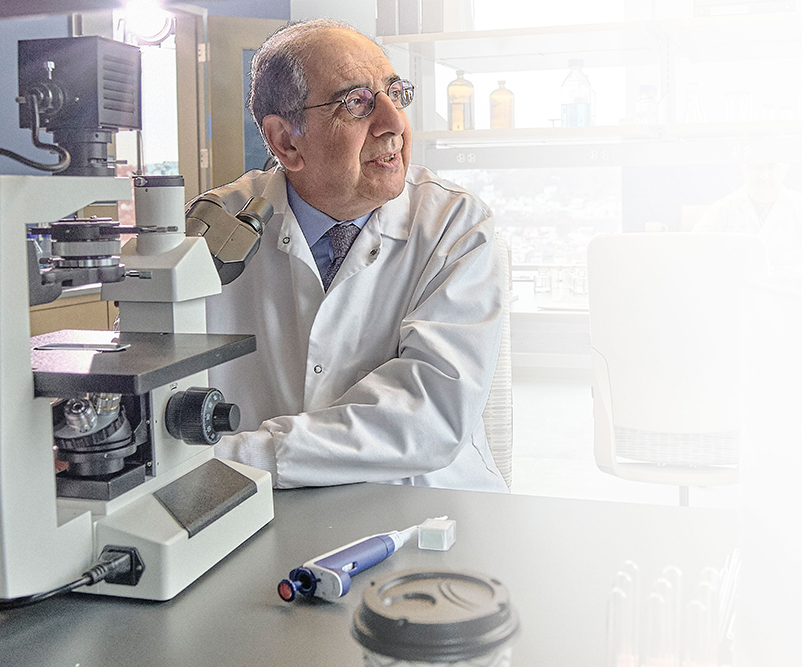 In 2021, a research team published findings in Nature Medicine that marked a genuine turning point in the history of vision science. A patient who had been blind for decades, his photoreceptors destroyed by retinitis pigmentosa, had received an optogenetic therapy that introduced light-sensitive proteins into the surviving cells of his retina. After a period of training and rehabilitation using a special device, he could detect objects. He could count items on a table. He could…see again. It was the first time in history that optogenetic therapy had restored any degree of visual function in a human being.
Dr. Sahel was the senior author on that paper.
In October 2025, the New England Journal of Medicine, published online (print version January 2026) the results of a multicenter trial demonstrating the restoration of reading vision in over 80% patients affected with end-stage, age-related macular degeneration. More than 30 patients in this trial had a subretinal wireless implant inserted in the central part of the retina. Dr. Sahel, who was lead author, collaborated with Daniel Palanker, PhD, of Stanford University, to bring this technology to first in-human trials. The trials resulted from decades of work, from bench to bedside, in partnership with academic groups, industry, and most importantly, patients, to develop novel therapies.
Dr. Sahel holds many titles: Distinguished Professor and chair of the Department of Ophthalmology at the University of Pittsburgh School of Medicine, director of the UPMC Vision Institute, Emeritus Professor at Sorbonne University, and since 2025, executive vice president of UPMC Enterprises.
In his capacity with UPMC Enterprises, Dr. Sahel serves as Chief of the UPMC Health Technology Advancement Program (HTAP), a newly formed initiative to accelerate how UPMC evaluates and adopts novel health technologies and therapeutics. It is, in its scope, exactly the kind of work Dr. Sahel has been doing for most of his professional life — finding the most efficient route to delivering better care to patients. The difference with HTAP is that the scope extends beyond the world of ophthalmology to the full extent of medicine and specialty practice at UPMC.
A Giant in the Modern Field of Ophthalmology
To understand what Dr. Sahel brings to his HTAP role and the mission of UPMC Enterprises, it helps to start with where he stands in his own discipline, because that standing is not incidental. It is the foundation on which everything else is built.
Ophthalmology, and specifically the treatment of inherited retinal diseases, is a relatively small scientific world. There are a handful of figures who have shaped it over the past 50 years: researchers who were present at the early formation of the field and who have driven its most significant advances. Dr. Sahel is among the most consequential of them, and his colleagues say so without qualification.
“You cannot really be an ophthalmologist working in the field of retinal diseases and research without knowing who Dr. Sahel is,” said Boris Rosin, MD, PhD, assistant professor of ophthalmology at UPMC. “I think the second paper I read in inherited retinal disease was his.”
Dr. Rosin is a vitreoretinal surgeon and inherited retinal disease researcher who came to UPMC as a fellow, was recruited by Dr. Sahel, and later joined the faculty. He came to ophthalmology via a circuitous path that included software engineering, a PhD in neuroscience, and a degree in medicine, and he gravitated early toward inherited retinal dystrophies. He did not have to look far before Dr. Sahel’s work became unavoidable.
Other colleagues have similar experiences.
“Before he came, I knew him as a giant in the field,” said Joseph Martel, MD, co-division chief, Retina and Vitreous Services, and vice chair, Patient Experience and Access, Department of Ophthalmology at UPMC.
Dr. Martel, who is a retinal specialist and has been on the UPMC faculty for 12 years, has collaborated with Dr. Sahel on multiple clinical trials, including several first-in human studies. He describes a similar experience: when Dr. Sahel arrived to take the department chairmanship, Dr. Martel was considering leaving the Department for another opportunity. He did not.
“[Dr. Sahel is] one of the real trailblazers in retina. When he came to Pittsburgh, there was simply no reason to leave. I knew things were going to change in a big way,” Dr. Martel said.
John Ash, PhD, executive vice chair of research in the Department of Ophthalmology, had known Dr. Sahel since 2006 through their shared service on the scientific advisory board of the Foundation Fighting Blindness. They occupied parallel lanes in the same research space for years before Dr. Ash came to UPMC in 2022, in large part to work directly alongside Dr. Sahel.
“He has a very good feel for where the whole field is at a high level,” Dr. Ash said. “He understands what the medical needs are, where the state of the art is, where the real gaps are. Sometimes he understands the potential of a project before the faculty member working on it does. And he can explain that to them and guide them toward the next step. That is a rare quality.”
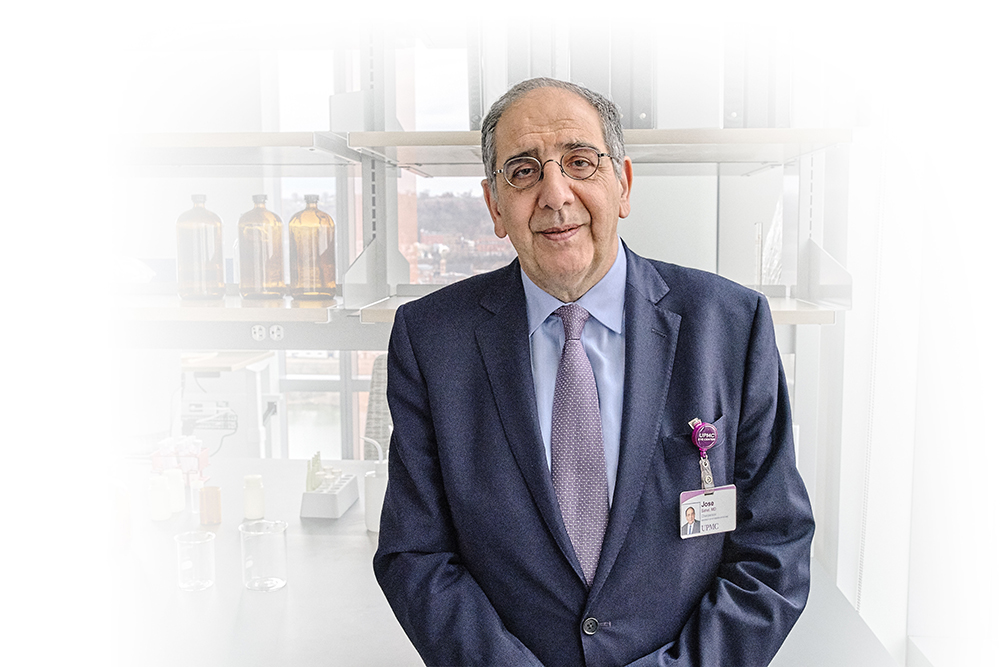 What distinguishes Dr. Sahel in the eyes of colleagues and peers is not just his incredible publication record or the numerous awards that have accumulated over a long career, though those are considerable. (The 2024 Wolf Prize in Medicine, shared with longtime collaborator, Botond Roska, for their optogenetics work, is among the most prestigious honors in the biomedical sciences. Election to the Academy of Sciences of France, the German National Academy of Sciences Leopoldina and the National Academy of Inventors mark a career of sustained international significance.)
What Dr. Sahel’s peers point to over and again, is something more specific: the range of therapeutic modalities he has advanced, and the consistency with which his work has resulted in treatments that actually help patients.
“He’s amazing in so many different fields and he’s excelled in all of them,” said Don Zack, MD, PhD, professor of ophthalmology at Johns Hopkins University School of Medicine. Dr. Zack has known Dr. Sahel since they worked together at Massachusetts Eye and Ear in Boston in the mid-1980s, where Dr. Zack was a resident and Dr. Sahel was a fellow.
Dr. Martel also cited Dr. Sahel’s wide range of expertise.
“He has driven innovation across gene therapy, artificial retina, stem cell therapies, optogenetics and neuroprotection. These are all very different approaches. They require different expertise, different collaborators, and different kinds of knowledge. To have made meaningful contributions across all of them, over a career, is extraordinary,” Dr. Martel said.
That breadth of work is not the product of accident. It shows how Dr. Sahel thinks about the problem he has spent his career trying to solve. Vision loss from inherited retinal disease does not present the same way in every patient, and no single therapeutic approach addresses all of its forms. A physician who understands the full landscape of treatment options, and who has helped build the clinical tools to deploy each of them, can offer patients something qualitatively different from a specialist whose expertise is narrow.
The Translational Imperative of Dr. Sahel’s Work
The concept of translational medicine is baked into the center of academic medicine. The gap between laboratory discovery and clinical therapy is widely acknowledged as a problem worth solving. What is rarer is a physician-scientist who has crossed that gap multiple times, across multiple technologies, and who has developed a clear-eyed, experience-grounded framework for how it actually works.
Dr. Sahel has that framework, and it shapes everything he does, from the way he runs his laboratory, to the way he recruits faculty, to the way he thinks about the commercialization of discoveries that might otherwise stay in the literature.
The core of his view, as described by those who have worked closely with him, is straightforward. Scientific discovery, no matter how significant, does not reach patients by itself. The pathway from bench to bedside needs high quality, rigorous, scientific foundational work, protection of intellectual property, formation of commercial entities, navigation of regulatory processes, cultivation of industry partnerships, and execution of clinical trials at a scale that academic institutions cannot sustain alone. Each of those steps requires specific expertise and resources. None of them happen as a matter of course. If they do not happen, the scientific discovery, regardless of its novelty or utility, helps no one.
“That old over-used expression, ‘bench to bedside’ — he’s really lived it,” Dr. Zack said.
“You can have the best idea in the world,” Dr. Ash said. “You can have the best publication in the world. But if you don’t develop it into intellectual property and commercialization, you’re not going to help patients.”
Dr. Ash offered a pointed illustration of what that failure can look like. Paul Sieving, MD, PhD, the former director of the National Eye Institute, has said publicly that his greatest professional regret was failing to file intellectual property on a set of drug compounds he studied earlier in his career. The compounds showed real effectiveness at slowing vision loss. He was focused on science, not on protection or commercialization. Those compounds remained on a shelf. Which means they didn’t end up helping patients.
That kind of loss is what Dr. Sahel has worked systematically to prevent. It is why, when laboratory work has reached a point of clinical and commercial viability, he has moved to protect it, structure it, and find the right vehicle to carry it forward. The more than a dozen companies he has co-founded to date were not built around a general interest in entrepreneurship. Each was organized around a specific unsolved clinical problem. GenSight Biologics to advance gene therapy for mitochondrial optic neuropathies and optogenetics
Pixium Vision to develop photovoltaic retinal prosthetics. SparingVision to pursue a mutation-independent gene therapy approach for rod-cone dystrophies. Avista Therapeutics to overcome challenges in delivering gene therapy. The company, in each case, was the instrument. The patient was always the focus point.
“I wanted to work with someone who demonstrates an enduring commitment to patients. José has a deep understanding of so many areas of science and medicine — that’s really rare. But what’s rarer still, is someone like that who is always grounded in what is best for patients,” said Leah Byrne, PhD, assistant professor of ophthalmology at the University of Pittsburgh School of Medicine and a co-founder with Dr. Sahel and Dr. Sieving of Avista Therapeutics.
Like so many others, Dr. Byrne came to Pittsburgh for the opportunity to work with Dr. Sahel. She credits conversations the two had about the thorniest challenges in gene therapy — namely the limitations around delivering large enough payloads of genetic material to impact eye disease — with influencing her academic work and the formation of Avista.
Avista, where Dr. Byrne is chief scientific officer, is translating her academic discoveries into an AI-enabled platform to overcome the difficulties in gene therapy delivery.
“He also has a deep understanding of what needs to happen for a company to be successful. I have learned a great deal from him on how best to tackle things in a company setting,” Dr. Byrne said. “But even more so, being reminded of his dedication to patients and desire to improve their quality of life, that perspective is always so helpful because it focuses you on what’s truly important.”
Dr. Rosin, who trained in a country with fully socialized health care before coming to the United States, describes the cultural resistance that many physicians feel toward commercialization in academic medicine and why he believes Dr. Sahel’s approach addresses it correctly.
“Medical school is an idealistic place where medical economics are almost frowned upon,” Dr. Rosin said. “But science costs money. You need people, you need materials, you need equipment. Commercialization is not a competition with science. It is how you fund the next generation of it. I understood that more clearly after working with Dr. Sahel than I ever had before. We don’t teach that in medical schools, but we should.”
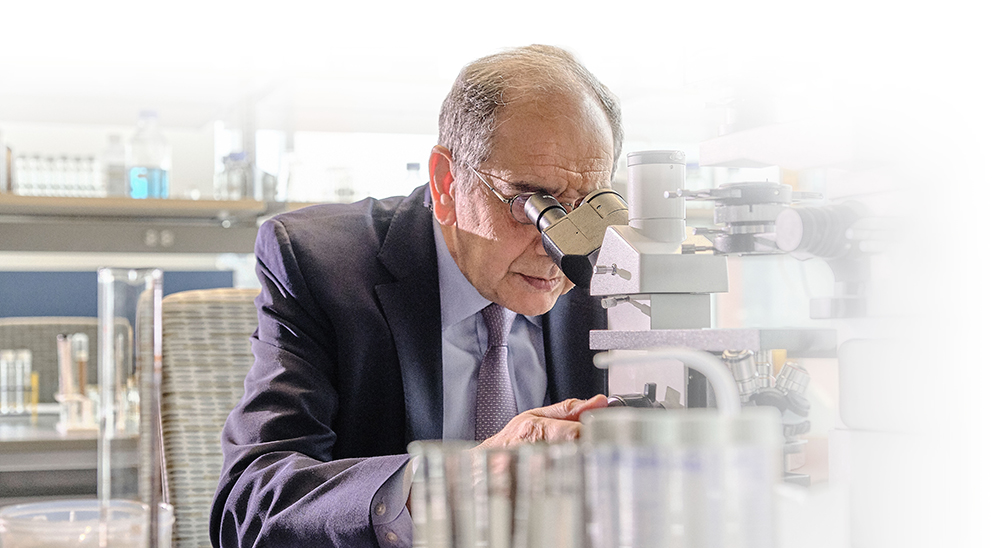 Beyond the philosophical case, Dr. Sahel brings a practical understanding of where the line falls between academic work and commercial readiness, and what to do when a project crosses it.
“He knows exactly where that boundary is,” Dr. Rosin said. “He knows when something that belongs in the lab needs to become a commercial entity. And once it does, he knows how to let the commercial process run while he turns his academic attention to the next big problem to solve. That is how you maximize what you can produce for patients over the course of a career. That’s how systems should operate. It’s the crux of what the new HTAP initiative at UPMC is all about.”
Dr. Ash described the evaluative dimension of this capacity. When Dr. Sahel assesses a research project, a potential startup, or a faculty candidate, he is drawing on a depth of knowledge that allows him to see things others cannot.
None of this is framed by those who know him as infallible. There have been companies that did not succeed, trials that did not deliver hoped-for results, investments in people or technologies that did not pay off. Dr. Sahel is not, nor do any of his colleagues describe him as someone who can claim a perfect record. Who can? What he has, though, is the accumulated judgment of someone who has been through the full cycle of translational medicine enough times to know what the warning signs look like and where the leverage points are.
“He doesn’t sugarcoat things,” Dr. Ash said. “He’ll tell you what he thinks, directly. But he is always supportive. Always. He genuinely wants the people around him to avoid the mistakes he has already made. That is what makes him such an effective mentor for faculty who are trying to develop their own translational work.”
Building Institutions That Produce Results
The translational philosophy that shapes Dr. Sahel’s approach to his own research also defines how he builds the institutions and environments in which others do theirs. He does not simply do translational science. He creates the conditions in which it can happen at scale, and he has done this consistently, multiple times, at every stage of his career.
Dr. Zack called him an amazing team- and institution-builder. “He creates environments where everyone feels valued and then they want to succeed.”
His first major institution-building effort came in Strasbourg, France, where he became a full professor at 32 years old, built a laboratory from scratch, maintained a full clinical and surgical practice, and grew a small research group to approximately 40 people. When he was recruited to Paris to chair the Department of Ophthalmology at the Quinze-Vingts National Ophthalmology Hospital, most of his Strasbourg team followed him.
In Paris, he founded the Institut de la Vision in 2008, directing it until 2021. At its peak, the Institut brought together more than 300 members from more than a dozen countries, overseeing more than 80 clinical trials across gene therapy, retinal prosthetics, optogenetics, and related modalities. To this day, it is regarded as the leading ophthalmology research institute in Europe.
Dr. Ash, who watched the Institut de la Vision develop from his own position in the field, says it is more than a biographical landmark of Dr. Sahel’s, but rather evidence of a repeatable pattern.
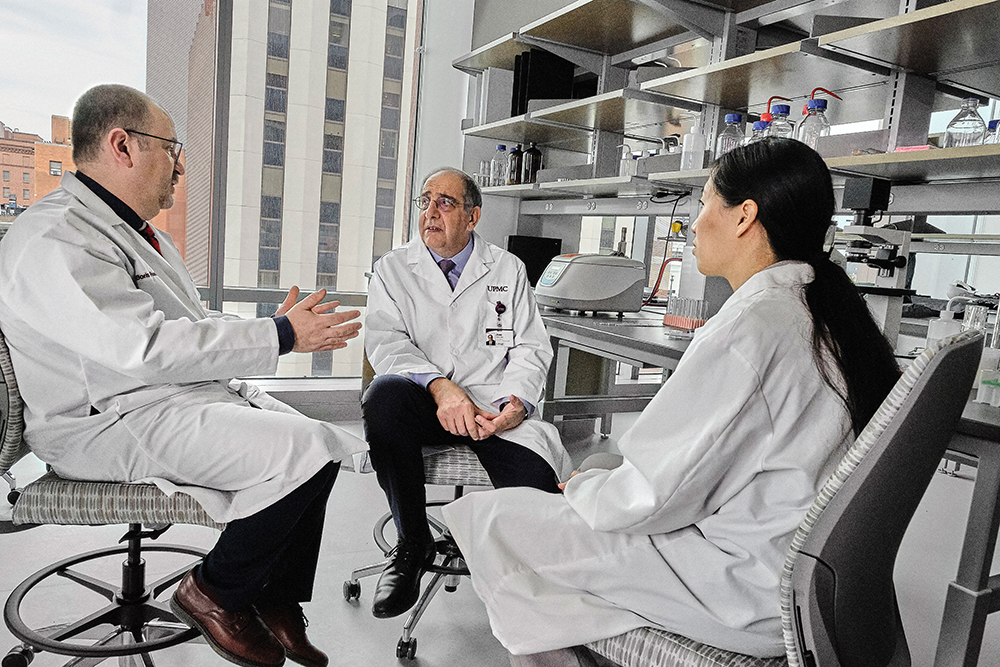 “The same pattern has come to fruition at UPMC and the University of Pittsburgh,” Dr. Ash said. “He invested early in imaging technology, in a stem cell program combining clinicians and bench scientists, in gene therapy spinouts, in companies working on machine learning and retinal imaging for predictive modeling. Connecting people with technology and driving it toward patient care. That has been the consistent thread across his entire career.”
Since arriving at UPMC in 2016, Dr. Sahel has built the Pittsburgh expression of the model he first executed with success in Strasbourg, and with comparable results. The Department of Ophthalmology has grown from roughly 35 clinicians and scientists to more than 100. There are now more than 40 principal investigators. The department is ranked among the top programs in the country in terms of National Institutes of Health-funding. The UPMC Vision Institute at UPMC Mercy Pavilion, opened in 2023, integrates clinical care, research, and education under one roof.
“You not only have to attract good talent, but you also have to know how to keep people and support the right people,” Dr. Martel said. “He has built an extraordinary atmosphere of translational research at UPMC and the University of Pittsburgh, where clinical faculty and research faculty are in constant conversation about the real problems that need solving and how to go about solving them.”
Another component to his success may also be an ability to find ways through the inevitable roadblocks and challenges that arise in any large project.
“He’s very good at cutting through the bureaucracy,” Dr. Zack said. “He just knows how to make things happen.”
The culture Dr. Sahel builds in these environments is described the same way by everyone inside them. Science drives decisions, not politics or ego. Resources are shared. Internal competition that would make researchers protective of their findings and resistant to collaboration is discouraged as unhelpful to patient care. The standard is set by the person at the top.
“No matter what I do, he works harder,” Dr. Rosin said. “I send an email at 1 a.m. and wake up at 6 a.m. to find a response already waiting. He leads by example. He does not manage by inducing stress or fostering competition. He manages the Department and his own work by showing people what the standard looks like and trusting them to meet it.”
Dr. Ash framed this leadership philosophy in similar terms. “The first question he asks when recruiting someone is: ‘What do you need to be successful?’ He wants to lift people up. He wants to remove the barriers that make it hard to do good science. And the message underneath everything is that the work is what matters. Not the politics, not the credit. It’s the science and what it can do for patients that matters most.”
That orientation extends to how Dr. Sahel has approached the development of the next generation of translational scientists and physician-entrepreneurs. He takes chances on young faculty and fellows with ideas and energy but incomplete track records. He mentors them through the translational process using the benefits of his own experience. He serves on the scientific advisory boards of startups and foundations in part because he sees those roles as an obligation to the broader field.
“He is not afraid to take a chance on people,” Dr. Ash said. “He looks for creativity, commitment, and a clear sense of direction. A lot of departments won’t hire someone without existing funding. He will hire someone straight out of a postdoc if he believes in their potential. That is how you build a field, not just a department.”
The Right Person to Accelerate Innovation
HTAP was created with a premise that is straightforward in nature, but difficult to execute in the real world: that a health system of UPMC’s scale and complexity should be able to move promising clinical innovations into practice more efficiently than the current landscape allows.
The gap between scientific discovery and clinical adoption is real, costly, and consequential for patients. Closing it requires a specific combination of scientific literacy, commercial experience, evaluative judgment, and the relational capital with industry and regulatory partners who help to carry technologies through development.
“Dr. Sahel brings so many tremendous qualities and vast experience to everything he does. That’s why he’s leading HTAP and why we’re honored and privileged to support him in this important work,” said Jeanne Cunicelli, executive vice president of UPMC and president of UPMC Enterprises. “HTAP is a perfect microcosm of the UPMC Enterprises’ mission: leveraging the strength of UPMC to evaluate cutting-edge health technologies and empower clinicians with breakthrough tools for patient care.”
Overseen by a committee of clinical leaders at UPMC, HTAP is quickly launching demonstration projects of promising technologies to determine if the solutions are worth implementing across the system.
By fostering collaboration across clinical, operational, and investment teams, Cunicelli said, “HTAP ensures that transformative solutions reach patients faster, keeping UPMC at the forefront of medical innovation.”
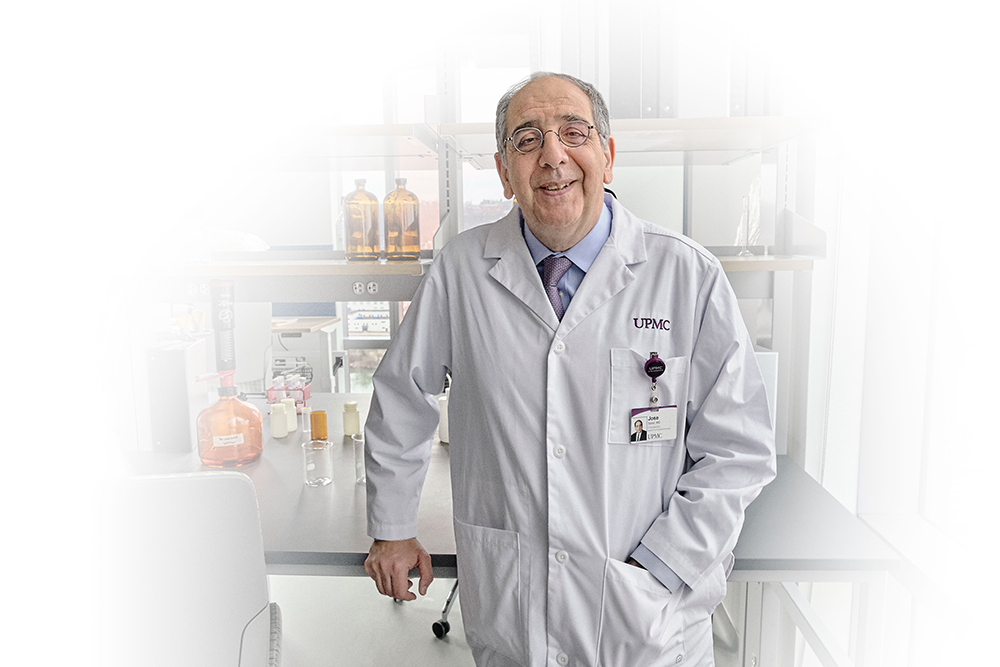 The combination possessed by Dr. Sahel is rare. It is not produced simply by a medical degree or a PhD. It is built through years of doing the work, making the full range of mistakes that come with it, and developing, through iteration and hard experience, the judgment to know what is likely to work and why. That and some innate talent, for sure.
“Everything he does is for the patients,” Dr. Martel said. “Whatever it takes to build, create or commercialize, the point is always to get the treatment to the patient. He has never lost sight of that. And at a moment when UPMC is trying to build something that accelerates exactly that process across the whole enterprise, I don’t think there is anyone better suited to lead it.”
Next Steps
- Download the UPMC Enterprises 2025 Annual Report to see our successes last year and vision for the future.
- Learn more about the leaders at UPMC Enterprises driving innovation in health care.
Note: UPMC has a financial interest in Avista Therapeutics, SparingVision, and GenSight Biologics.