Feb 16, 2026
Meet the Executive Leading UPMC Sponsored Clinical Trials and Partnerships
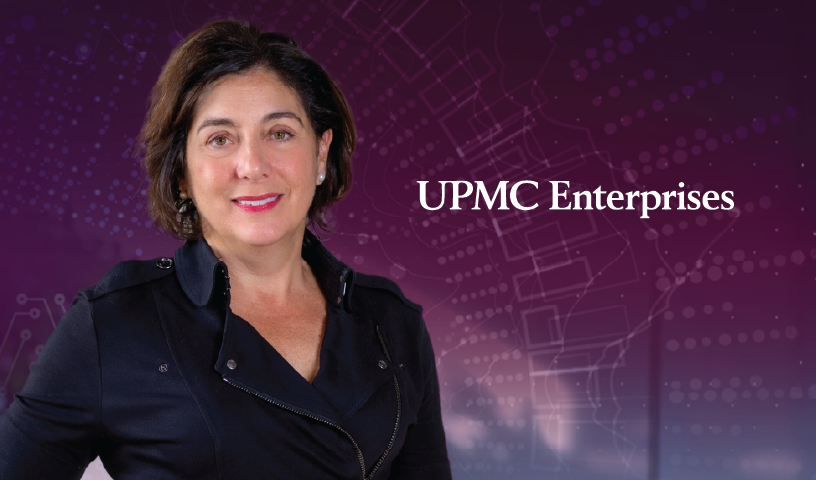
Nicole Ansani is senior vice president, New Development Initiatives, at UPMC Enterprises and she is spearheading changes to UPMC’s industry-sponsored research programs.
When Nicole Ansani joined UPMC Enterprises in late 2023, it represented her career coming full circle.
The clinical pharmacist had earned her PharmD degree from the University of Pittsburgh and had worked and taught at Pitt and UPMC before spending 20 years in the pharmaceutical industry, most recently as a senior medical director of women’s health at Pfizer.
In those two decades, she saw firsthand the challenges industry sponsors face bringing clinical trials to academic medical centers. And now she had the opportunity to lead the charge at UPMC to improve its sponsored clinical trials office.
Over the past two years, Dr. Ansani has revamped the office now known as UPMC Sponsored Clinical Trials and Partnerships, centralizing functions and oversight, adding staff, investing in technology, and bringing a new attitude to the system.
“We want to send the message that UPMC is open for business when it comes to sponsored research,” she said. “Because when we are more responsive to industry, we have the opportunity to bring more innovative therapies to UPMC’s patients that they might not otherwise be able to access.”
We sat down with Dr. Ansani to learn more about her position and her near- and long-term goals for the program.
Why is UPMC Sponsored Clinical Trials and Partnerships being operated by an executive from UPMC Enterprises?
UPMC Enterprises can play a critical role in strengthening our organizational efficiency and bringing a business-minded structure to clinical research operations. One of the biggest challenges in clinical trial execution is slow startup time. We are focused on achieving operational excellence, and, at the same time, leadership in this space requires innovation. These are areas where UPMC Enterprises excels.
Our Digital Solutions team actively evaluates emerging technologies that could help us improve patient recruitment, trial design, and overall trial execution. The steady pipeline of new tools and expertise they are looking at can shape how UPMC innovates in clinical trials.
Our Ahavi real-world data platform adds another key capability. As trials become more complex and expensive, Ahavi’s access to rich clinical data opens the door to new approaches, such as pragmatic trials that rely on real world data to reduce required enrollment or follow patients more efficiently. By leveraging data in a secure, compliant manner, we can better assess feasibility, determine whether UPMC has the right patient population, and strengthen our ability to recruit for trials fully. Ahavi is also an ideal partner for phase IV and postmarketing trials that often are necessary to meet regulatory requirements.
And then our Translational Sciences team further expands our innovation ecosystem. Their work in biodiscovery, omics, and drug indication development provides opportunities to identify new treatment pathways and support sponsors in exploring promising subgroups or follow up analyses based on Phase III results. For emerging biotech companies, we offer a valuable onramp — a place to conduct early phase trials with a partner capable of activating quickly and delivering high quality execution.
Together, Digital Solutions, Ahavi, and Translational Sciences create a powerful intersection of expertise. Clinical trials at UPMC have become both a proving ground for breakthrough ideas and a collaborative environment where new technologies, data capabilities, and scientific innovation can grow.
What are some of the recent changes that you’ve been helping to lead?
Over the last year-plus, we’ve been working on upgrading our infrastructure. We’ve been improving processes with a focus on the metrics around activation time. One of the most important updates has been the implementation of a clinical trial management system across all of UPMC. That system, OnCore, went live in October.
We’ve also been working closely with the Ahavi team, which I already mentioned. We see so much potential for that platform and providing insights based on our real-world data for our sponsor partners.
Another major focus has been on growing the team. We’ve doubled the number of positions supporting Sponsored Clinical Trials and Partnerships, including my senior leadership team made up of a senior clinical director, a senior manager for the clinical trial management system, and a senior scientific manager. We’ve also added a concierge, who is essential to enabling us to partner across UPMC and its many departments and divisions.
What this early work has created is a consolidated and cohesive department with responsibility for the full process for sponsored clinical trials, from pre-award through post-award, making sure that the lanes of how you execute clinical trials are very clear.
Longer term, what is your vision for sponsored clinical trials at UPMC?
That’s the fun part. In its simplest terms, pharmaceutical or device companies should think of UPMC first when they are planning a clinical trial. When that happens, then I’ll know I’ve done my job well.
Traditionally, pharma companies have worked with health systems in a very transactional way. They come in and say, “we have a trial,” and we execute it and move on. It’s very transactional. I want to change that into more of a partnership model. It’s a model where we take all the benefits that UPMC has to offer, the scale of our system, our world-class expertise, diverse patient population and health plan, and marry all of those together and now you can say to an industry partner, “we want to have an enduring relationship where we can help you with more than simply executing on your clinical trial.”
We know there’s an unmet need in the patient journey, from the clinical trial to clinical practice and to understanding how product approval is improving patient outcomes. Being able to have that relationship across the continuum is where I see our long-term future, and that’s really where I get excited.
Talk a little more about the assets of UPMC and how they benefit industry sponsors.
UPMC has one of the largest integrated health systems in the country, with 40 hospitals and 800 outpatient clinics. We have pathology labs, a huge patient population, providers, researchers, and a 4-million-member health plan.
That scale is key to Ahavi, which gives us the ability to mine our structured and unstructured data going back years all in a safe and compliant platform. The platform allows us to map the patient journey, looking at time-event sequencing and being able to pull context from physician notes.
In addition to data and analytics, our world class providers and centers of excellence have international reputations. It’s really incredible.
Why should UPMC or any health system be interested in improving sponsored clinical trials?
The bottom line is that it’s for the patients. A faster, more efficient, and more responsive clinical trials program leads to more clinical trials, which gives patients more opportunity to access innovative treatments close to home.
Next Steps
- Read how access to real-world data drives deeper insights for clinical trial sponsors.
- Download our research report, “Opportunity for Improvement: Performance of Clinical Trials Programs at Academic Medical Centers.”